Bolt Fastening: An Overview
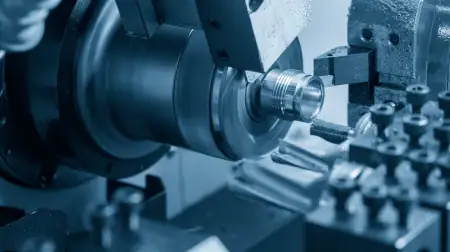
As an industry-leading bolt manufacturer, Chicago Nut & Bolt has over 30 years of experience providing innovative fastening solutions used in many different industrial applications. Our custom bolts are engineered for reliable fastening, structural support, and durability.
Here we’ll take a closer look at the role bolts play in manufacturing, different types and how they work, and factors for engineers, procurement managers, and OEMs to be aware of when specifying bolts for different applications.
An Introduction to Industrial Fastening
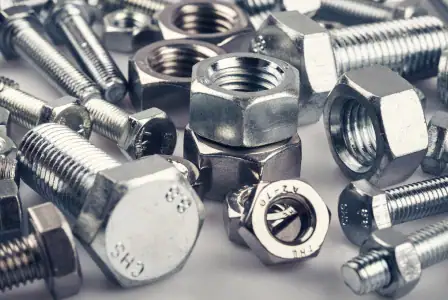
Nuts and bolts are a foundational industrial fastening system consisting of a flat nut with internal threads and an externally-threaded bolt. The threads engage and as the nut and bolt are twisted together.
At their most basic, nuts and bolts are used to join two or more parts securely together, with the bolt on one side of the assembly and the nut on the other. They also provide holding power that adds structural integrity and improves safety in assemblies, enclosures, and structures ranging from buildings to machinery. Because they are generally easy to disassemble, nuts and bolts can be removed from an assembly for maintenance or repair, then replaced without damaging components.
The following considerations are important for specifying custom bolts:

Material compatibility
Depending on what materials the parts are composed of, fasteners may not hold adequately, or in the case of dissimilar metals, galvanic corrosion can result, which may compromise holding power or proper thread engagement.

Strength requirements
Different grades of metal have varying tensile and yield strength levels, which has an effect on how tightly the nut and bolt can be secured, how well threads engage, and the risk of the bolt breaking or becoming stripped.

Thread characteristics
The threads on a bolt have several characteristics that effect how they engage and hold. These include the thread angle, inner and outer diameter, depth, shape (i.e., parallel, spiral, direction), pitch (i.e., distance between crests), and the number of threads per inch.

Capacity to maintain pre-load/clamping
Things like vibration, loading, dynamic forces, and even material characteristics can cause bolts to rotate and loosen, which may risk equipment damage, structural integrity, and safety.
Bolts in Modern Manufacturing
Bolts are essential in modern manufacturing, providing strong yet removable connection points for equipment, enclosures, structures, and vehicles. While their basic design and function remain consistent, modern bolts have benefitted from several advances in technology that improve their performance and useful life. These include:

Advanced materials, including heat- and corrosion-resistant superalloys.

High-precision, CNC machining capabilities.

Specialized inserts, coatings, and thread designs that improve resistance to rotation and loosening.
Types of Bolts and Their Critical Features
Bolts are available in different configurations, sizes, and designs to improve their utility in different applications. This versatility makes bolts a trusted choice across industries.
The Mechanics of Bolted Joints
Bolted joints convert applied torque into tension, stretching the bolt and creating a clamping force between the components. This tension holds the parts together through friction, preventing parts from moving while under load. The proper amount of torque for the specific bolt must be applied in order to create sufficient pre-load and minimize the risk of a bolt loosening due to vibration or other factors.
Common Types of Industrial Bolts
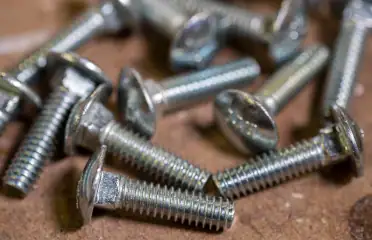
Carriage bolts
These have a smooth, round head and a square shoulder below the head. The shoulder bites into the material and prevents the bolt from spinning while the nut is tightened. They are often used in wood-to-wood connections, such as framing, fencing, and furniture assembly.
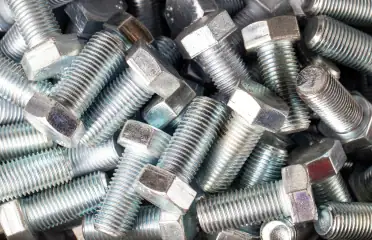
Hex head bolts
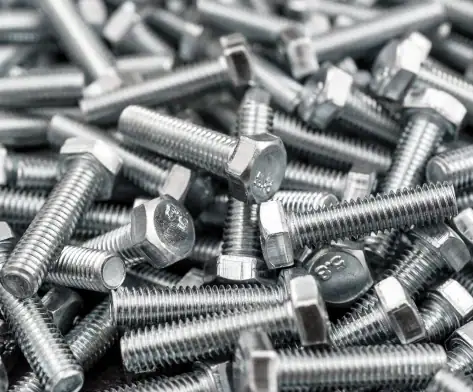
These have a hexagonal head that is compatible with wrenches or sockets. They are used for many different automotive, construction, machinery, and structural applications.
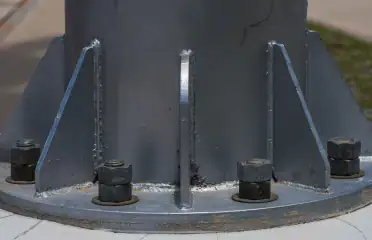
Structural bolts
The heavy-duty, high-strength fasteners are used to secure steel components together in bridges, cranes, buildings, and other load-bearing applications. They have exceptional shear resistance and tensile strength, with heavy hex heads for secure, high-tension connections.
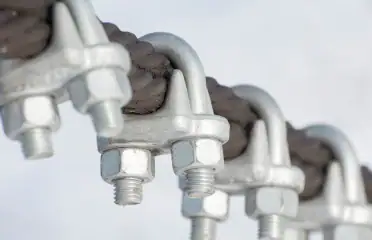
U-bolts
These bolts have a characteristic U-shaped bend and threads on both ends. They are used to fasten tubes, pipes, and other cylindrical items to flat surfaces. U-bolts provide a stable connection and are commonly used in automotive, construction, and plumbing applications.
Advantages of Quality Bolted Connections

Ease of disassembly for recycling

Adjustability

Facilitates easy maintenance and repairs

Provides structural integrity

High tensile strength

Resists vibration and loosening
Bolt Fastening Best Practices
It’s important to fasten nut and bolt pairs carefully to avoid mis-threading, stripping threads, or leaving the connection too loose. Follow these steps to create a reliable connection:
Step
Use the correct size bolt and corresponding nut, ensuring that materials, threads, and configuration match specifications.
Step
The bolt is pushed through a pre-drilled hole in the part, and the nut is engaged from the opposite side.
Step
The initial turns of the nut should be made by hand so that threads are aligned correctly.
Step
A wrench or socket is used to tighten the nut the rest of the way.
Step
Visually inspect the completed joint to verify that the nut is properly engaged and the joint is secure.
Custom Fastening Solutions from Chicago Nut & Bolt
While standard bolts work for many applications, there are times when off-the-shelf solutions do not match specific requirements. Our custom bolts are the ideal way to meet these unique challenges.
Quality Assurance and Testing Standards
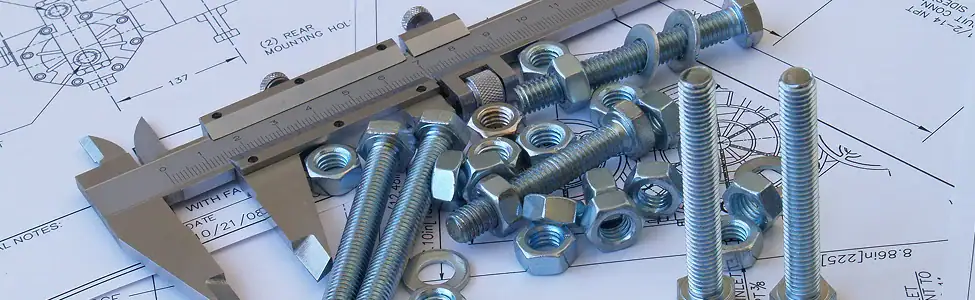
Our quality assurance (QA) program includes comprehensive in-house mechanical and dimensional testing for both short-run and large-volume production.Bolts from Chicago Nut & Bolt meet ASME, ASTM, and SAE requirements.
Custom Bolt Manufacturing: Sizes, Threads, and Exotic Alloys
Custom bolts are generally machined with CNC equipment for precision, efficiency, and minimal variation.Our bolt customization options include:
The choice of material depends on the details of the application and the operational and environmental conditions bolts are exposed to. The loads that bolts will support as well as the torque and tensile strength requirements are directly related to the strength of the material. What’s more, materials need to withstand any moisture, chemicals, dissimilar metals, salt spray, extreme temperatures, or vibrations for long-term performance. Common material options include:
- Aluminum.
- Brass.
- Stainless steel.
- Titanium.
- Carbon steel.
- High-performance, exotic alloys.
The choice of material depends on the details of the application and the operational and environmental conditions bolts are exposed to. The loads that bolts will support as well as the torque and tensile strength requirements are directly related to the strength of the material. What’s more, materials need to withstand any moisture, chemicals, dissimilar metals, salt spray, extreme temperatures, or vibrations for long-term performance. Common material options include:
- Aluminum.
- Brass.
- Stainless steel.
- Titanium.
- Carbon steel.
- High-performance, exotic alloys.
The choice of material depends on the details of the application and the operational and environmental conditions bolts are exposed to. The loads that bolts will support as well as the torque and tensile strength requirements are directly related to the strength of the material. What’s more, materials need to withstand any moisture, chemicals, dissimilar metals, salt spray, extreme temperatures, or vibrations for long-term performance. Common material options include:
- Aluminum.
- Brass.
- Stainless steel.
- Titanium.
- Carbon steel.
- High-performance, exotic alloys.
Contact Chicago Nut & Bolt for a Quote
At Chicago Nut & Bolt, we have over 30 years of experience with custom manufacturing of fasteners, including bolts, that are used across industries.
Contact us to learn more about our capabilities custom bolt options, or request a quote for your application.